Home > Our stories > Ticking Off My Bucket List – Mount Kilimanjaro on World Ranger Day
Ticking Off My Bucket List – Mount Kilimanjaro on World Ranger Day
November 11, 2025
By Murray Wilson
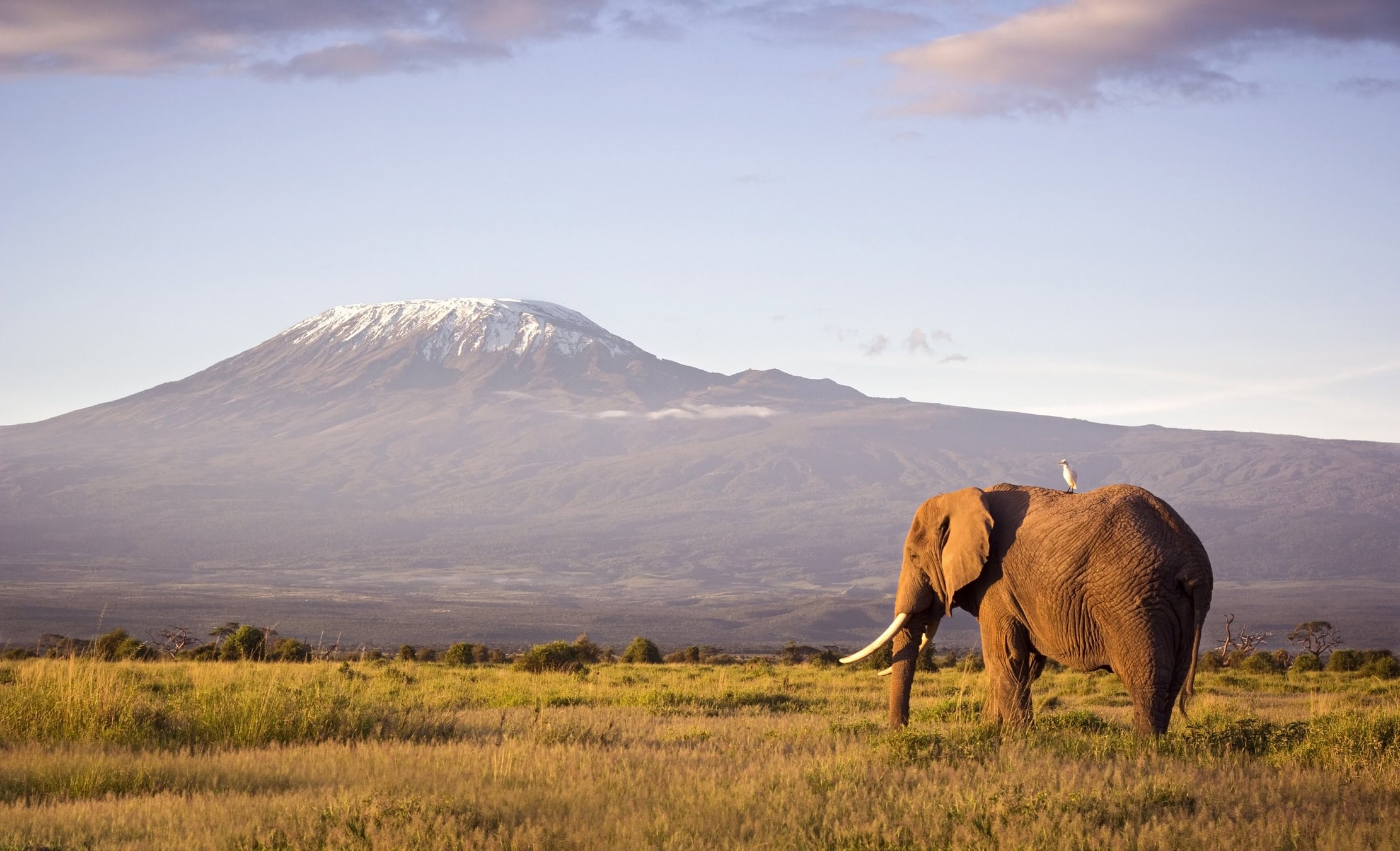
Climbing Tanzania’s Kilimanjaro is one of those bucket list items many people dream about. At almost 6000 metres above sea level and towering over the savannahs of Africa, it is truly intimidating. As the plane started its descent into Kilimanjaro International Airport, I peeked bleary-eyed out of the tiny window to watch the sun rising; before it, a towering mass of rock and ice that seemed to float above cloud level. Friends’ words echoed in my ears – “You should have done more training.”
I was sharing this experience with 12 other intrepid travellers, committed supporters of the Thin Green Line, who were there not only to conquer a mountain but also to raise funds and see first-hand the incredible work of rangers who protect Africa’s iconic wildlife.
After the briefing on the seven-day trek, the assembled team checked gear and reviewed maps before the first day on the Rongai track. We started the trek truly buzzed.
All we had to carry was a day-pack thanks to the “hard as nails” group of almost 50 porters who carried our packs, the tents, kitchen equipment, chairs, tables, and other essentials in a remarkable display of endurance. I was thinking, “This is going to be a piece of cake!”

Day one included just a few hours of hiking, strolling through rainforests, and dining on some of the best camp food I have ever eaten.
Then the rainforest gave way to a sparse, dry landscape – a cross between outback Australia and the moon. Some days we climbed 1000m, rock hopping across ledges. With each step, the challenge I did not train for crept in – the altitude.
Five days later, we arrived at base camp. Slightly fitter, a lot quieter, and caked in fine black dust. We also had a new appreciation for the advice of the guides – “poly, poly” (Swahili for ‘slowly, slowly’).
Now things got super real. Our guide, Joel, laid down the law. Starting at 11pm, there was to be a disciplined, slow ascent to the summit. Where we were going was a dangerous place. A focused and slightly sombre air took over the group as we checked our food supplies, water, batteries, and multiple layers of thermals.
Step by step, we trudged up Kilimanjaro, a chain of head torches. Spirits were good until about half-way. Pitch black, seemingly impenetrable walls of rock ahead, and the temperature had dipped to –15 degrees C. My water was frozen, food frozen, and my old friend altitude was a heavy weight on my chest.
Slowly, a very dim but definite light was peeking over the African horizon. We saw the occasional rickety sign made from old wood, and increasing amounts of ice. Then the landscape flattened out, and after seven hours we could see the summit. All of us clambered onto the final cairn – Uhuru Peak, Mt Kilimanjaro, the highest point in Africa.
Following several happy snaps as proof of the achievement, we trudged down towards the hills. It was World Ranger Day; we were very tired but also very pleased with ourselves.

Kili was awesome, but for me there was another aspect of the trip that was just as good – possibly better. I had relatively recently commenced as general manager of the Thin Green Line, an organisation I had admired for well over a decade. To see the work of wildlife rangers in person was a unique chance to understand – to breathe the reason Thin Green Line does what it does.
Following the Kili climb, we travelled to the Amboseli Conservancy in Kenya, experiencing the landscapes and abundant wildlife there. For me, the time spent with rangers was the most memorable part. Camping out in Amboseli, I had my first contact with local rangers, many of whom had been trained through a Thin Green Line project called LEAD Ranger. The rangers were Maasai people whose traditional culture is deeply entwined with caring for the land. It is only natural that many are drawn to the ranger vocation.
During our visit, they openly explained their life as Maasai and how their role as rangers offered a path connected to their passion for the environment. All up, almost 400 rangers, mostly Maasai, care for 1.6 million acres across Amboseli, not just in national parks but also on privately owned and traditional Maasai lands, to ensure wildlife can exist and migrate as they have always done.
Then on to the headquarters for LEAD Ranger in the Tsavo region of Kenya. Here at Wildlife Works (another of Africa’s amazing conservancies), hundreds of rangers had been trained, returning to ranger organisations across Africa with skills in first aid, leadership, emergency response, and land/wildlife management. They arrived as eager recruits and left as competent and confident leaders capable of dealing with situations ranging from poaching to bushfires. These skilled rangers form an effective frontline against key threats to the environment.
What stands out most is the ripple effect of the role. The LEAD Ranger graduates are not just rangers – they take on the roles of teachers, doctors, and emergency response experts. They are who the community turns to in challenging times. For many, these rangers have changed from an authoritarian figure to something of a “rockstar” career of choice.
I left full of admiration for the rangers I had met, quietly knowing I had made an excellent career choice to support these men and women on the frontline of conservation.
Related stories


Stories
December 2, 2025

Share this
Tagged Africa, Foundation Updates, Fundraising, Ranger Training